Cell Phone Usage Policy and Philosophy Here at Stone:
A Letter to Families from Associate Head of School Abby Kirchner
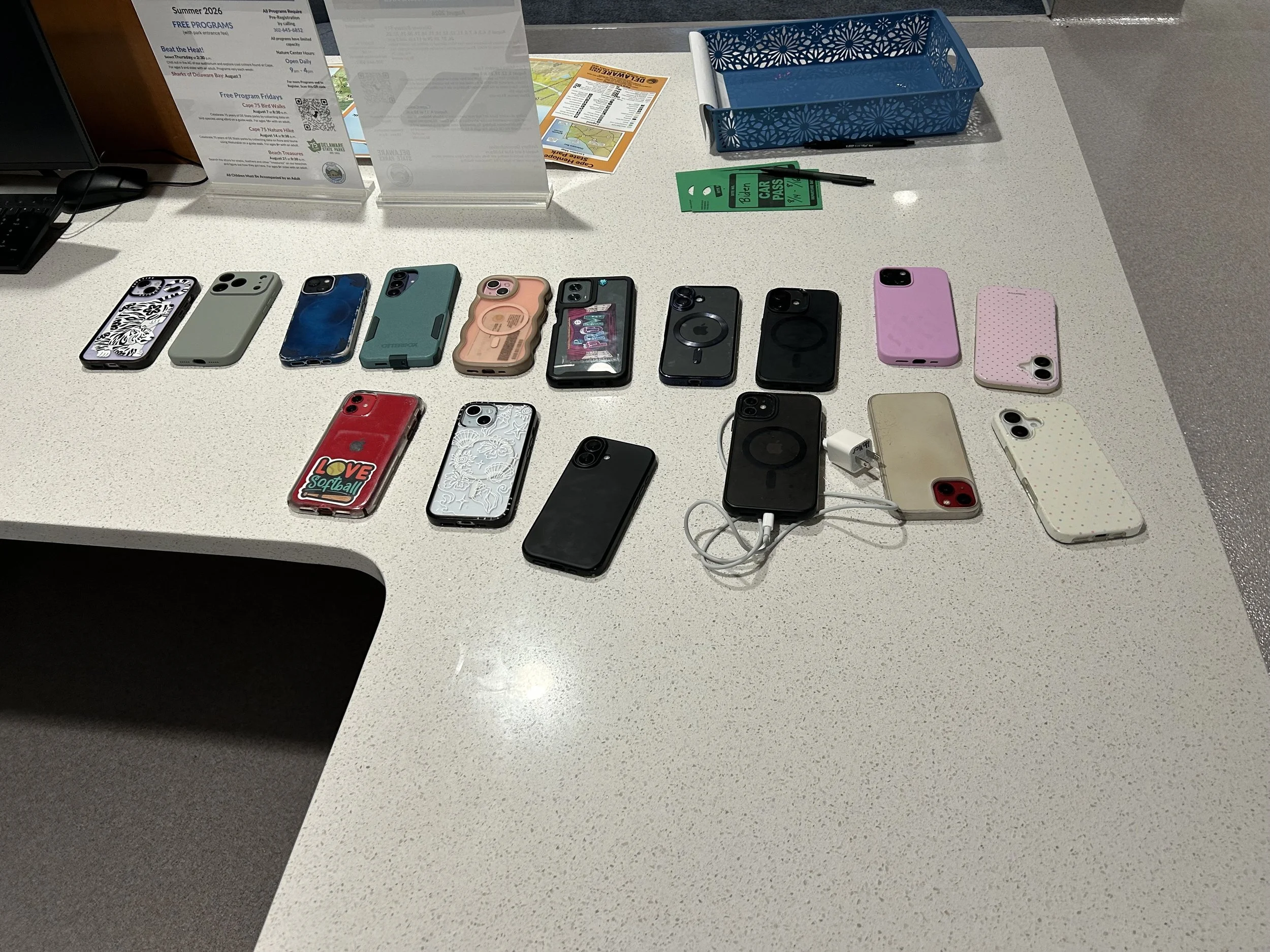
Schools all over the country are moving toward what are being called "bell-to-bell" phone policies — meaning that when students arrive at school, their phones go away, and when the school day ends, they get their phones back. Pennsylvania itself has been moving toward requiring public schools to adopt policies like this. Storing away cell phones is becoming a pretty normal part of being a student in 2026.
But our reason for moving away from phones isn’t, "Well, everybody else is doing it." That's not a very Stone reason to do anything. In fact, we most often find ourselves intentionally designing the student experience here to be different from what everyone else is doing.
This has been a change years in the making, involving lengthy faculty and administrative team conversations, consultation with our students and student government, a parent survey, close consideration of other schools’ polices, and a stack of research that wasn't as clean or one-sided as we expected. As it turns out, the research on phone bans does not provide consistent evidence that there is some kind of direct relationship between, say, school phone use and academic achievement. But that same research is much more consistent about phones' impact on distraction, mood, and feelings of connection.
And that’s the part that matters most to us.
Because our reason for making this change is actually about what we want to add to the student day, not what we want to take away from it.
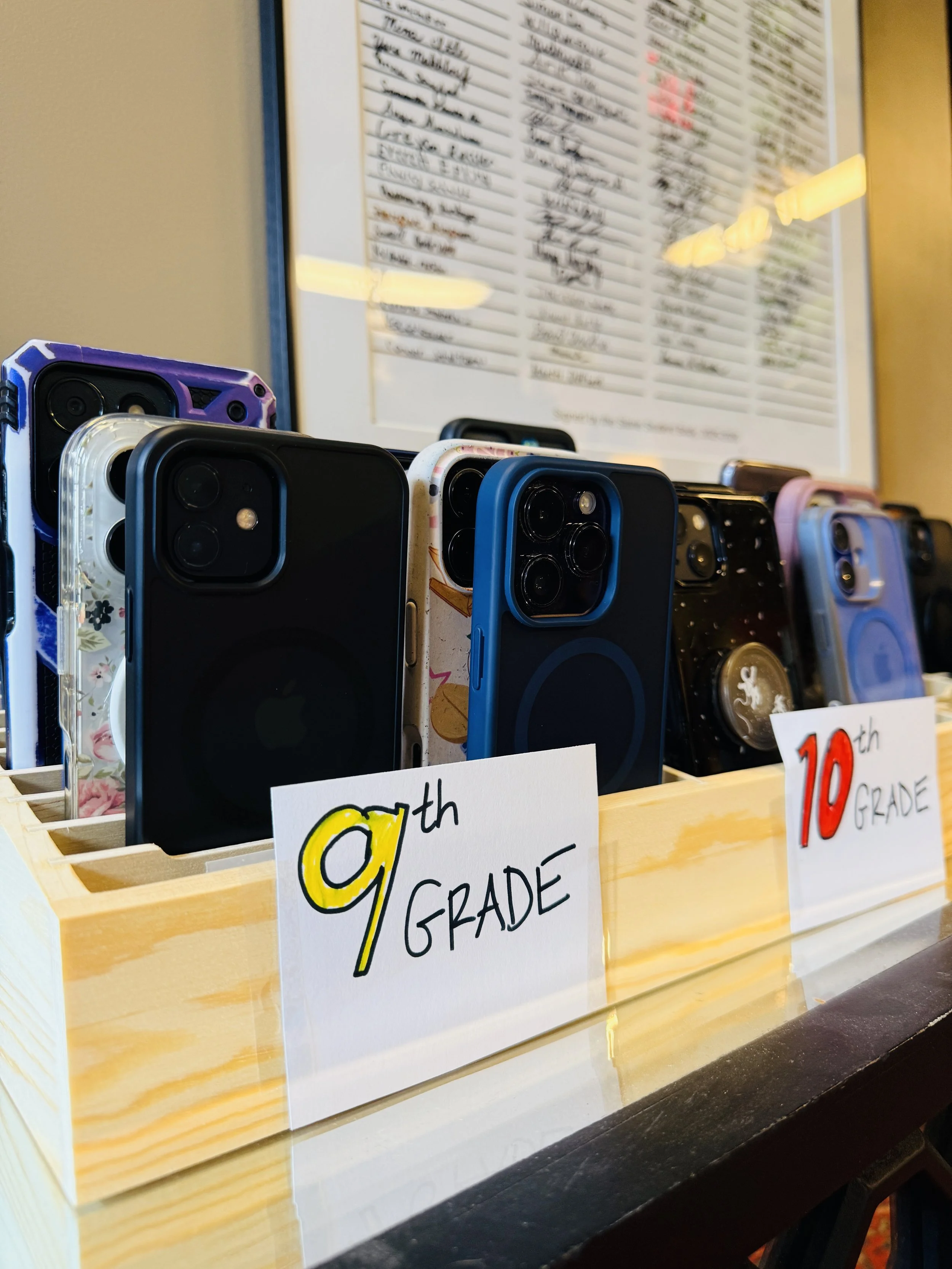
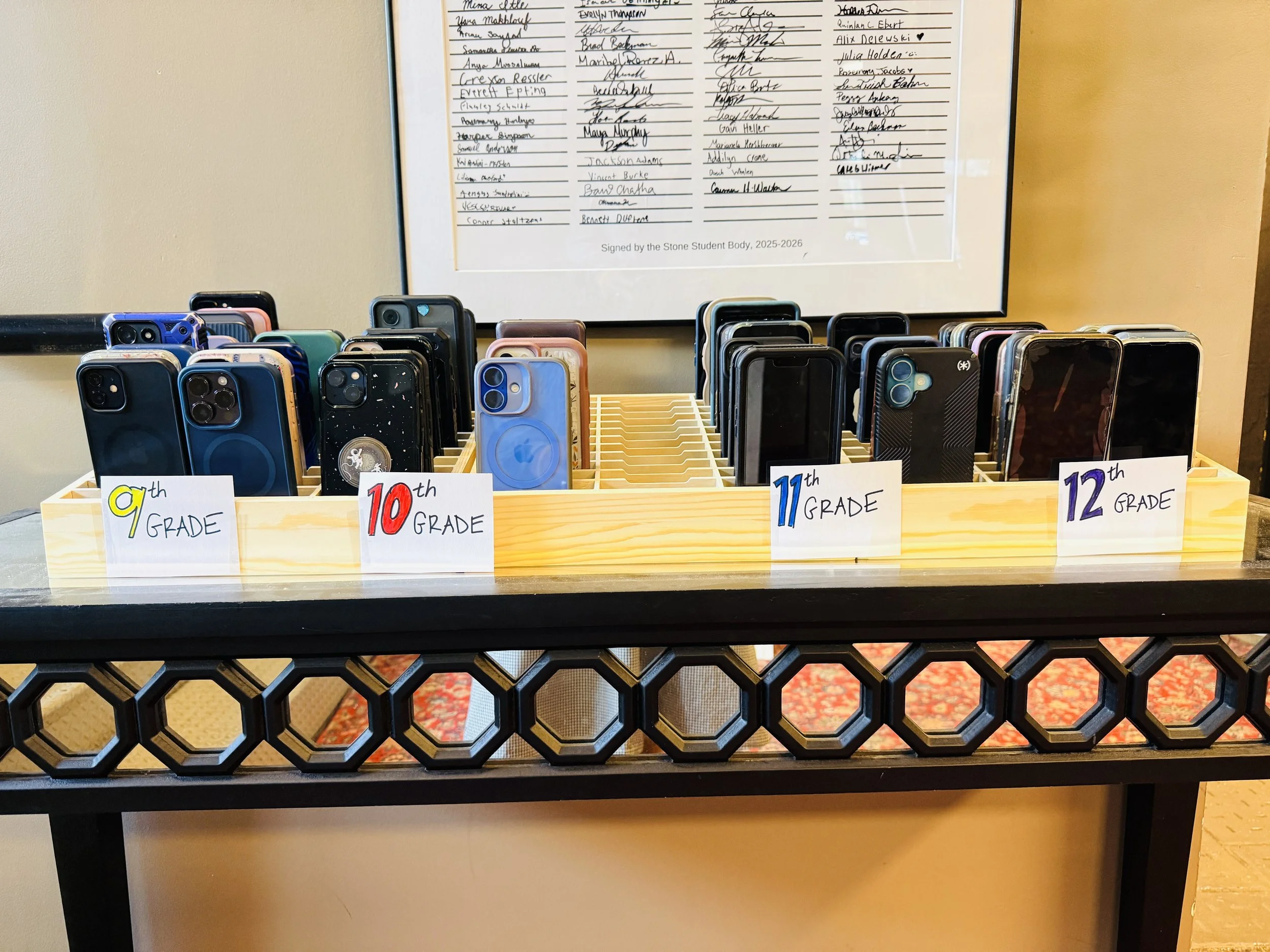
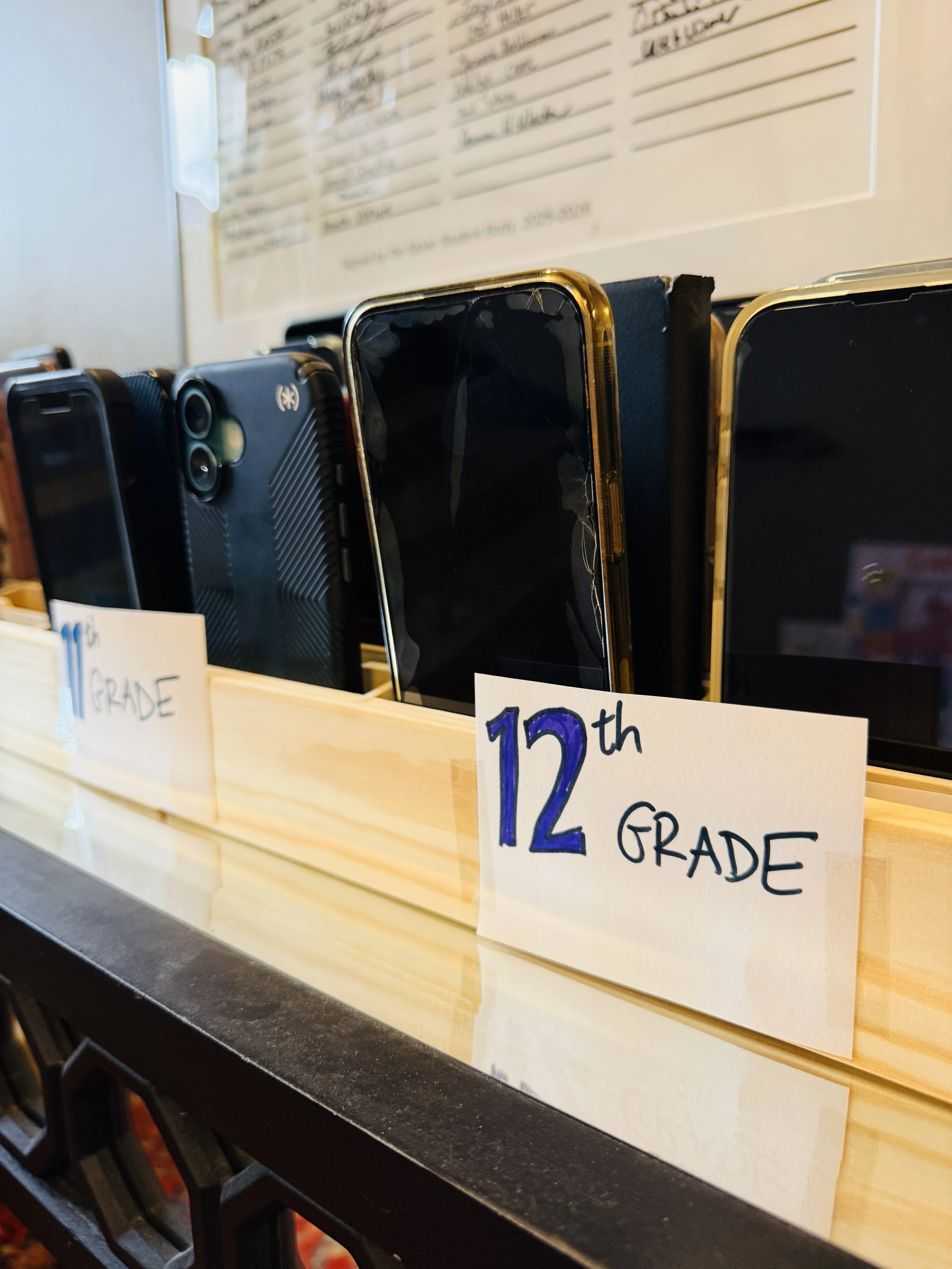
Our Upper School Cell Phone Hotel lives intentionally below our signed Mission.
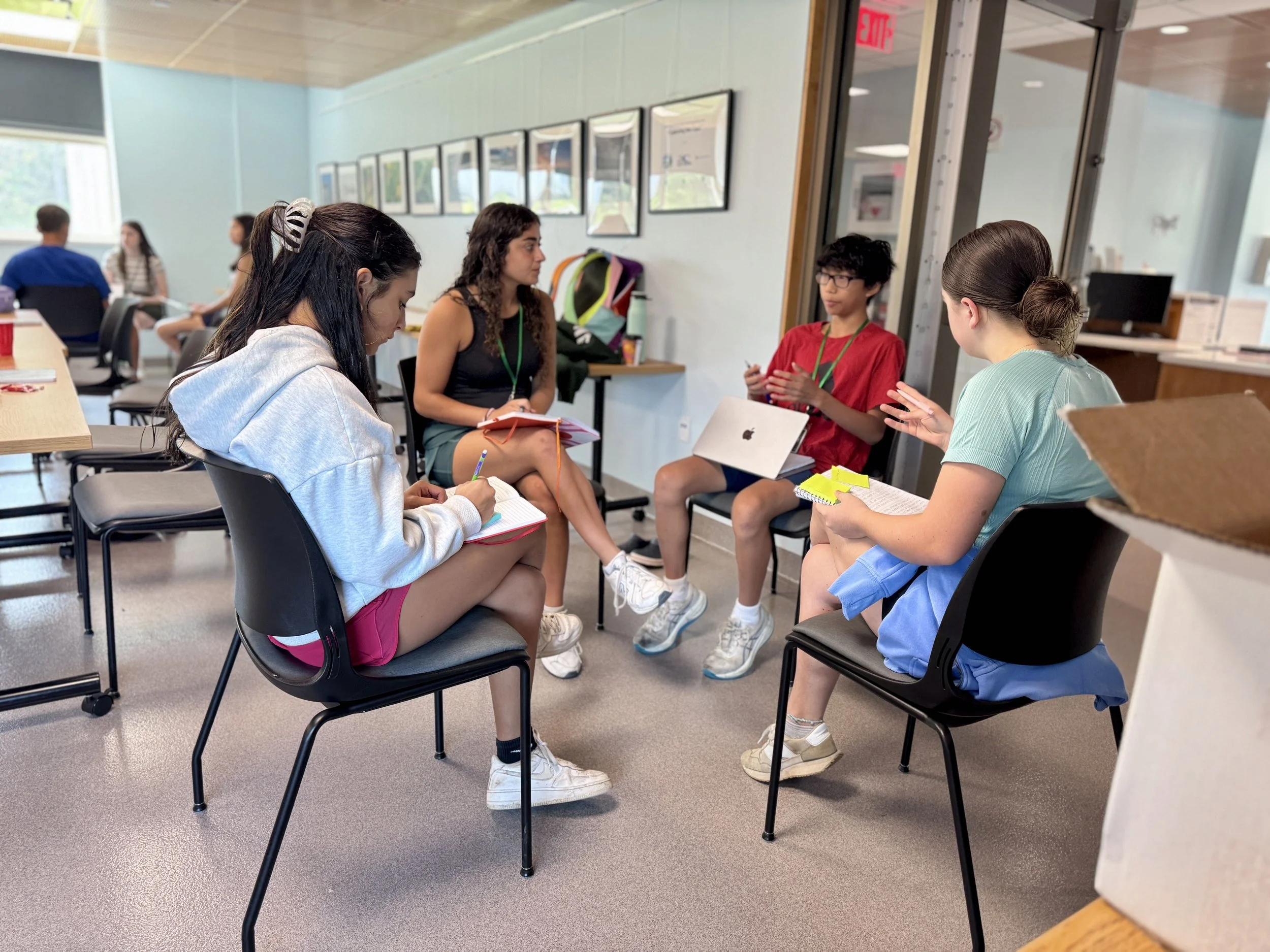
Stone's Mission asks students to practice empathy, act ethically, and do inspiring work that matters — work that makes a measurable difference in the world around them, and work that is integral to developing into an informed, creative problem-solver capable of critical thought and higher order collaborative work. All three depend on a capacity that constant phone access quietly erodes: the ability to be fully present with the people in front of you. Phones are remarkably good at denying us those minutes of presence: just having one within reach, buzzing occasionally in a bag, pulls a little bit of our attention off whatever — or whoever — is actually in front of us. A student scrolling between classes is not available for the unplanned hallway conversation, the awkward silence that turns into real connection, or the boredom that often precedes a genuinely original or creative idea.
All of which is to say: “Away for the Day” is a value position more than it is a management strategy.
This is simply our way of saying that our time together matters.
This is not a decision based on a belief that phones are bad, that teenagers can't be trusted, or that adults have somehow mastered their own relationships with technology. None of those things is true. We are only interested in what might be added to a school day — and added to our students’ lives — when phones are removed from it. As Oliver Burkeman writes in Four Thousand Weeks: Time Management for Mortals, “Your experience of being alive consists of nothing other than the sum of everything to which you pay attention.”
And we want so much more for our students’ lives than what they can find in their phones.